5G rollout impact worldwide
The rollout of 5G — the fifth generation of mobile network technology — has moved beyond early adoption and is now rapidly transforming connectivity across the globe. By 2025–2026, 5G reached roughly 3 billion subscriptions and about 55% global population coverage, making it one of the fastest mobile technology deployments ever.
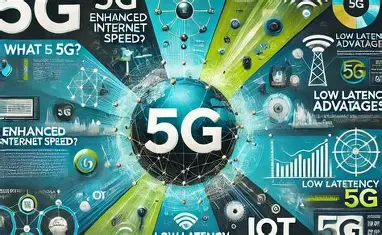
One of the biggest impacts of 5G is super‑fast mobile connectivity. Compared to older networks like 4G, 5G delivers much higher speeds, ultra‑low latency (so there’s almost no delay when you send or receive data), and the ability to connect many more devices at once. This makes heavy‑data activities like high‑definition video streaming, cloud gaming, VR/AR applications, and real‑time collaboration smoother and more reliable. With 5G, mobile users around the world can enjoy richer experiences on their phones, tablets, and emerging connected devices.
The economic benefits are also huge. Studies estimate that 5G technology could add around US $1.3 trillion to the global economy by 2030, boosting productivity and innovation across industries such as healthcare, manufacturing, transportation, and utilities. For example, in smart cities, 5G is enabling intelligent traffic control, energy‑efficient infrastructure, and connected emergency services, all of which improve everyday life and reduce costs for governments and businesses.
Another major impact is the growth of Internet of Things (IoT) ecosystems. 5G can support thousands of connected devices in a small area without lag or congestion, which is vital for smart factories, automated vehicles, precision agriculture, and remote monitoring systems. This means factories can operate robots and sensors in real time, farmers can monitor crops with connected drones, and cities can optimize waste management and lighting using data from smart sensors.
Different regions are experiencing 5G deployment at varying speeds. Some countries in the Middle East, North America, and Asia are already pushing toward very high penetration rates, while regions in Europe and parts of Africa are working to expand coverage further. Projects in countries like India show how fast 5G can be rolled out: almost all districts are now covered, and operators are preparing networks that can support AI and future digital transformation.
For everyday users, 5G means faster downloads, better video calls, smoother cloud gaming, richer AR and VR content, and a more connected experience overall. On a larger scale, 5G is laying the foundation for future technologies like autonomous vehicles, smart healthcare systems, and advanced industrial automation.
In short, the global rollout of 5G in 2026 is more than just a faster mobile network — it’s a catalyst for economic growth, digital innovation, and a new era of connected experiences that will shape how we live, work, and play in the years ahead.
FAQ: 5G Worldwide in 2026
Q: What makes 5G better than 4G?
A: 5G offers much higher speeds, very low delays (latency), and the ability to connect many more devices at the same time — perfect for video streaming, cloud gaming, and smart devices.
Q: How widely is 5G available in 2026?
A: By mid‑2025–2026, 5G networks covered around 55% of the global population with billions of subscriptions.
Q: What industries benefit most from 5G?
A: Healthcare, manufacturing, transportation, utilities, smart buildings, and IoT systems all benefit through faster data, real‑time control, and better automation.
Q: Will 5G change everyday life?
A: Yes — from smoother video calls and better gaming on phones to connected smart cities and automated machines in factories.
Q: Is 5G rollout equal everywhere?
A: No. Some regions are ahead with high coverage, while others are still expanding networks and improving infrastructure.